How to Choose a Used Hyundai 485 Excavator for Mining and Heavy Earthmoving Projects?
Release time: 2026-10-29
Table of Contents
Choosing a large excavator for mining or heavy earthmoving is about more than finding a machine with enough power. Buyers also need to consider the material being handled, daily production targets, site conditions, maintenance history, and the cost of getting the machine ready for work. These factors become even more important when purchasing used equipment, where two machines of the same model may have very different operating histories.
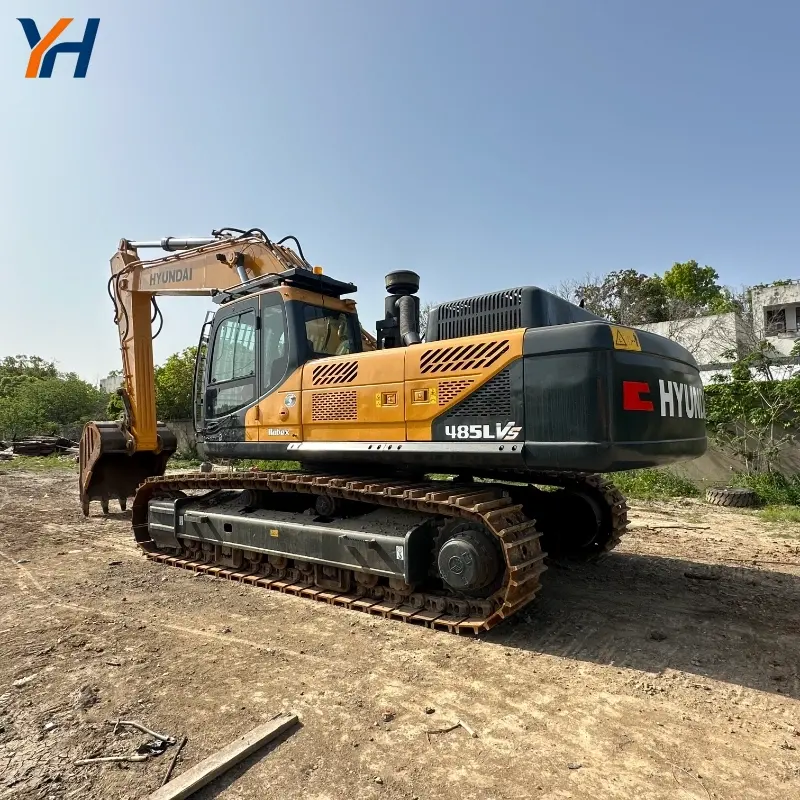
The Hyundai ROBEX485 is worth considering for projects that require a large crawler excavator. Yiheng Machinery currently lists a 2023 unit with 626 recorded working hours, a 48.5-ton operating class, a Cummins QSM11 engine, and a 2.2 m³ bucket. For buyers researching a used Hyundai 485 excavator, these specifications provide a useful starting point, but they should always be assessed alongside the machine’s actual condition and the requirements of the intended job. A well-planned purchase begins with matching equipment capability to real working conditions rather than choosing by model name or price alone.
What Makes the Hyundai ROBEX485 Suitable for Heavy-Duty Work?
A large excavator needs to deliver the right combination of digging force, working reach, bucket capacity, and operating stability. In mining, quarrying, and large earthmoving operations, the machine may need to handle dense materials, work through long shifts, and load haul trucks efficiently. However, actual productivity depends on the material, digging conditions, operator technique, and the way the excavator is integrated into the overall workflow.
The listed Hyundai ROBEX485 has an operating class of 48.5 tons and a bucket capacity of 2.2 m³, with a stated engine output of 266 kW at 1,900 rpm. This combination makes it a candidate for evaluating on substantial earthmoving jobs, provided its configuration suits the site. Buyers should also check the required digging depth, working radius, ground bearing conditions, and transport limitations before deciding whether a machine of this size is appropriate. A larger excavator is not automatically more productive if the site is restricted or the supporting trucks cannot keep pace.
How to Match Excavator Capacity to Mining and Earthmoving Requirements
When selecting a used Hyundai 485 mining excavator, buyers should look closely at the type of material being excavated and the volume that needs to be moved each day. Loose soil, compacted earth, blasted rock, and other heavy materials place different demands on the bucket, working equipment, and overall machine. A bucket that works well in one application may not be the most practical choice in another, particularly when material density and truck-loading requirements vary.
It is also important to consider the entire production cycle. If an excavator loads trucks that are too small, too slow, or poorly matched to its bucket capacity, the machine may spend more time waiting than digging. On the other hand, oversized trucks can create unnecessary costs when daily production volumes are limited. Buyers should evaluate loading height, digging depth, swing space, ground conditions, and the distance between excavation and unloading areas. Matching these factors helps determine whether a 48.5-ton machine will fit the project efficiently. For contractors planning long-term use, the right decision is the one that supports consistent production without creating avoidable operating expenses.
What Should Buyers Inspect Before Purchasing a Used Hyundai Excavator?
The condition of a used excavator matters just as much as its specifications. Start with the engine and hydraulic system, checking for abnormal smoke, fluid leaks, unusual noises, delayed hydraulic response, and inconsistent movement. The swing mechanism, travel motors, boom, arm, pins, and bushings also deserve attention because wear in these areas can affect working precision and lead to costly repairs. For a machine intended for demanding earthmoving, a short walkaround is not enough to establish its actual condition.
The undercarriage is another major consideration. Track chains, rollers, idlers, sprockets, and track shoes experience substantial wear during heavy operation, especially on abrasive or uneven ground. Ask for maintenance records and inspect the machine while it is running and performing its normal functions. The listed Hyundai ROBEX485 has 626 recorded working hours, but that figure should be verified against the hour meter, service documents, and visible wear. A low hour reading alone does not guarantee good condition. Before committing to a purchase, request clear inspection photos, operating videos, and a written report covering any known repairs or defects.
How Do Purchase Price and Operating Costs Affect the Decision?
The purchase price is only one part of the cost of owning a large excavator. Buyers should also account for transportation, shipping insurance, import duties where applicable, routine maintenance, replacement parts, fuel, and any repairs needed before the machine enters service. These costs vary by destination, working conditions, and the machine’s actual state, so it is worth preparing a realistic budget before comparing offers. A machine with a lower asking price may not be the more economical option if it requires major component repairs shortly after delivery.
For reference, Yiheng lists its 2023 Hyundai ROBEX485 at $60,000 per unit, with a price of $59,000 per unit when purchasing five units. The listed specifications include a Cummins QSM11 engine, 266 kW at 1,900 rpm, and a 2.2 m³ bucket. These details give fleet buyers a starting point for comparing equipment and estimating project requirements. However, the quoted price and availability should be confirmed directly with the supplier before ordering. Buyers purchasing several machines should also clarify whether the quoted amount includes attachments, inspection arrangements, export preparation, or shipping. Comparing offers on the same commercial basis makes the final decision much more reliable.
Why Are Inspection Reports and Shipping Preparation Important?
International buyers often make purchasing decisions without being able to inspect equipment in person. In this situation, detailed documentation can help reduce uncertainty. Request the machine’s serial number, hour-meter photos, engine start-up video, hydraulic operation footage, maintenance records, and inspection results. If the equipment will be used in a demanding mining environment, an independent inspection may provide additional confidence before payment and shipment. The inspection scope should be agreed in advance so both parties understand which components and operating functions will be evaluated.
Shipping preparation deserves similar attention. Large crawler excavators require suitable transport arrangements, and buyers should confirm the machine’s dimensions, weight, loading method, and any disassembly needed for transport. Export documents, shipping terms, insurance responsibilities, and destination-country import requirements should also be clarified before the order is finalized. Yiheng supplies used construction machinery and provides inspection information and operating videos for buyers to review; its product listing also states that third-party inspections can be arranged. Confirm the available documents and specific service terms for the individual unit rather than assuming every arrangement is included in the purchase price.
Is a 48.5-Ton Excavator the Right Choice for Your Project?
A used 48.5 ton excavator may be worth considering when a project requires substantial digging capacity and sustained earthmoving output. However, the right machine depends on more than its operating weight. Buyers need to evaluate material conditions, daily production targets, truck compatibility, access limitations, transport costs, and the condition of the particular unit. For projects with restricted .working space or relatively low material volumes, a smaller excavator may be more economical. For large-scale excavation, the additional capacity of a larger machine may be useful if the supporting fleet and work plan can make effective use of it.
The Hyundai ROBEX485 listed by Yiheng provides a concrete option for buyers evaluating large used excavators. Its recorded year, working hours, engine specification, bucket capacity, and quoted price can help narrow the search, but the final decision should follow a review of the machine’s actual condition and the project’s requirements. Before purchasing, prepare a clear list of expected workloads, operating conditions, and budget limits. Then compare those needs with the available equipment and request any missing inspection information. This approach helps buyers make a more informed decision and gives suppliers a clearer understanding of the machine required.
FAQ
What are the main specifications of the used Hyundai ROBEX485?
The unit listed by Yiheng is a 2023 Hyundai ROBEX485 with 626 recorded working hours, a 48.5-ton operating class, a Cummins QSM11 engine, stated output of 266 kW at 1,900 rpm, and a 2.2 m³ bucket. Buyers should confirm these details and the machine’s current condition before purchase.
Is the Hyundai 485 suitable for mining projects?
It may suit certain mining, quarrying, and heavy earthmoving applications, depending on material conditions, site layout, machine configuration, and production requirements. Buyers should assess the intended workload rather than relying on tonnage alone.
How should buyers verify the working hours of a used excavator?
It may suit certain mining, quarrying, and heavy earthmoving applications, depending on material conditions, site layout, machine configuration, and production requirements. Buyers should assess the intended workload rather than relying on tonnage alone.
What is the listed price of the used Hyundai 485?
Yiheng lists the unit at $60,000 each, or $59,000 per unit when purchasing five units. Confirm current availability, final pricing, and any additional shipping or import-related costs directly with the supplier.
Can buyers request an inspection before shipment?
Yiheng’s product listing states that inspection reports and operating videos are available and that third-party inspection is welcome. Buyers should confirm the scope, timing, and arrangements for the specific machine before placing an order.